
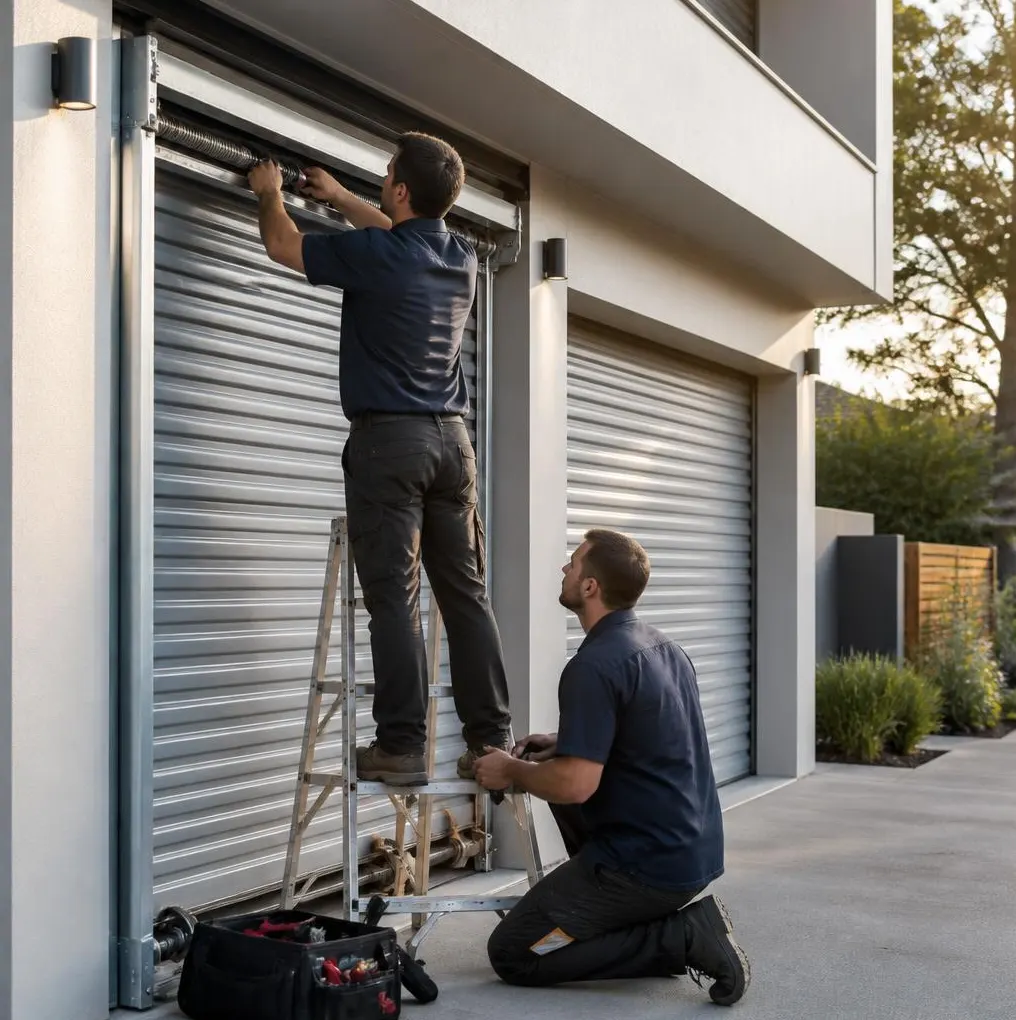
Most homeowners test a garage door the same way they test a light switch: push the button, watch it travel up and down, and if nothing looks or sounds wrong, call it good. It's tempting because it takes zero effort and the door does appear to work. But that test only tells you the opener is strong enough to muscle the door open and closed — it tells you nothing about whether the springs are actually carrying their share of the weight. A door can look perfectly fine on the opener and still be dangerously out of balance, and that imbalance is quietly wearing out the opener every single time it runs.
What "Balanced" Actually Means
A garage door is supposed to be counterweighted by its springs so that, with the opener disconnected, it can sit still at almost any point along the track. The opener's motor is only meant to provide a small push to start and guide the movement — not to lift the bulk of the door's weight. When springs lose tension (which happens gradually with age, temperature cycling, and simple wear) the opener starts doing work it was never designed to do.
Tools You'll Need
- A pair of work gloves
- A flashlight, if your garage is dim
- A second person, helpful but not required
- Nothing else — this test does not require winding bars, a ladder, or any spring adjustment tools
Step-by-Step: Testing the Balance
- Close the door completely. You need a known starting point.
- Find the manual release. It's the red-handled cord hanging from the trolley on the overhead rail. Pull it down and toward the back of the garage to disconnect the door from the opener.
- Lift the door by hand to about waist height, roughly three feet off the ground.
- Let go and watch what happens. A properly balanced door will stay put or drift down slowly. A door that falls shut quickly, or one that shoots upward on its own, is out of balance.
- Repeat the test at a few different heights — quarter-open and three-quarter-open — since some doors bind or lose tension unevenly along the track rather than uniformly.
- Reconnect the opener by pulling the release handle again until you hear or feel the trolley lock back onto the rail, then test one full open-close cycle with the button.
What an Unbalanced Door Does to the Opener
When springs can't carry their share of the weight, the opener's motor and gears take on the difference every time the door runs. Over weeks and months, that shows up as:
- Higher amp draw on the motor, which shortens the life of the circuit board and capacitor
- Premature wear on the drive gear, belt, or chain, since they're now straining against real weight instead of just guiding it
- Force settings creeping higher as installers or homeowners compensate, which masks the spring problem while making the opener hit obstacles harder than it should
- Lift cables fraying or jumping off the drum as they take on uneven tension
- In the worst case, a torsion spring breaking outright and dropping the door's full weight onto the opener's drive mechanism all at once
None of this happens overnight, which is exactly why the push-the-button test misses it for so long.
Why This Matters More Here
Hemet's swing between hot, dry inland summers and cooler, wetter winters puts steel springs through real temperature cycling, which affects tension over time. Dust buildup on rollers and tracks during the dry season can also make a door feel heavy or sluggish in a way that mimics a spring problem, so it's worth wiping down the tracks and checking rollers before you assume the springs are the culprit.
What You Can Check Yourself vs. What Needs a Technician
Safe for a homeowner: the manual balance test above, a visual check of the lift cables for fraying or rust, listening for grinding or popping during operation, and keeping tracks and rollers free of dust and debris.
Not a DIY job: adjusting spring tension, replacing a torsion spring, replacing cables, or realigning a track. Torsion springs store a serious amount of energy under tension, and working on them without the right winding bars and training is one of the more dangerous jobs around a house. If your balance test showed a problem, that's where the job stops for a homeowner and starts for a technician.
When to Call Hemet Garage Door
If your door fails the balance test, or the opener has started straining, reversing unexpectedly, or making new noises under load, it's time to call in Spring Replacement rather than keep running the opener against bad tension. We'll check spring wind and tension, inspect cables and rollers, and recalibrate the opener's force settings once the door is actually carrying its own weight again. If it's just been a while since anyone looked at the hardware, our Garage Door Maintenance service covers the same inspection points before small wear turns into a stuck or broken door.
If your garage door in Hemet, San Jacinto, or anywhere nearby isn't balancing the way it should, give Hemet Garage Door a call and we'll get it sorted before it costs you an opener.